
40 lines
1.6 KiB
Markdown
40 lines
1.6 KiB
Markdown
# GB-GameOfLife
|
|
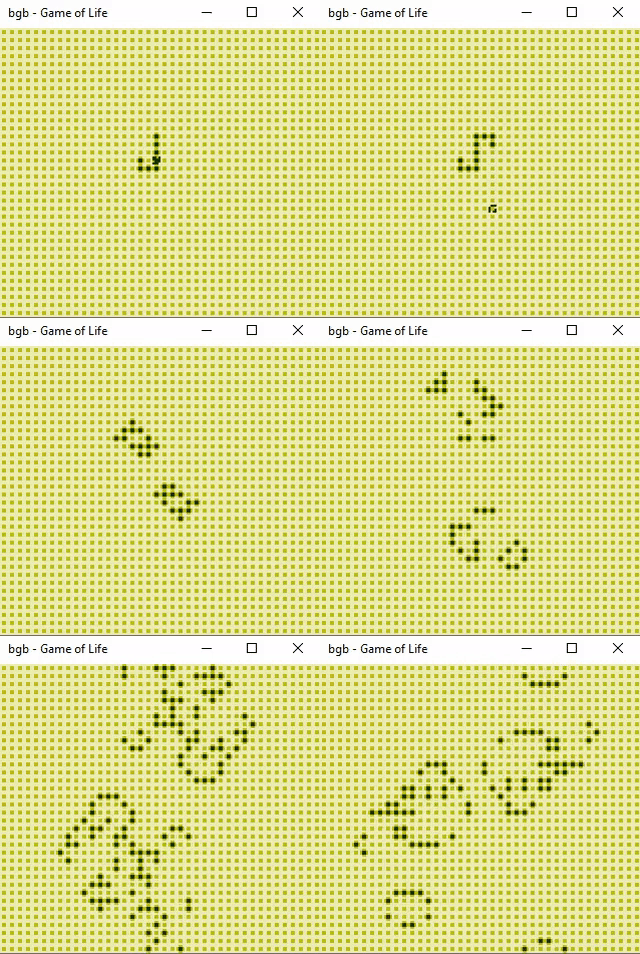
An implementation of Conway's Game of Life for the GameBoy.
|
|
|
|
|
|
|
|
Press START to pause and enter edit mode.
|
|
|
|
In edit mode:
|
|
- use the d-pad to move the cursor
|
|
- press A to toggle a cell's state
|
|
- press B to trigger one step of the automata
|
|
- press SELECT to clear all the cells
|
|
|
|
Press START again to resume animation of the automata.
|
|
|
|
# Project's Backstory
|
|
I started this as my first real programming written entirely in assembly.
|
|
I thought the gameboy was a good fit for that, with its not too complex
|
|
instruction set. I chose Conway's Game of Life because it's quite a
|
|
classic of CS exercises and I thought it would be simple enough to do.
|
|
|
|
Boy, I was wrong.
|
|
|
|
I know the gameboy is far from fast enough to update all pixels on
|
|
screen in between each frame. Who would have thought it would also
|
|
not be fast enough to just update its 20x18 tiles? That's only 360
|
|
bytes! In the v-blank, the time between two frames are rendered by
|
|
the Picture Processing Unit or PPU, and where you have access to
|
|
Video RAM, there's barely enough time to write to a quarter of the
|
|
tilemap. And that's without reading from it!
|
|
|
|
But there's hope: first, the gameboy has enough video ram to hold
|
|
two tilemaps, so we can double buffer. Second, the v-blank is not
|
|
the only time where you can write to Video RAM, you can also write
|
|
in between the PPU rendering lines! That requires synchronising code
|
|
with rendering but it should be doable.
|
|
|
|
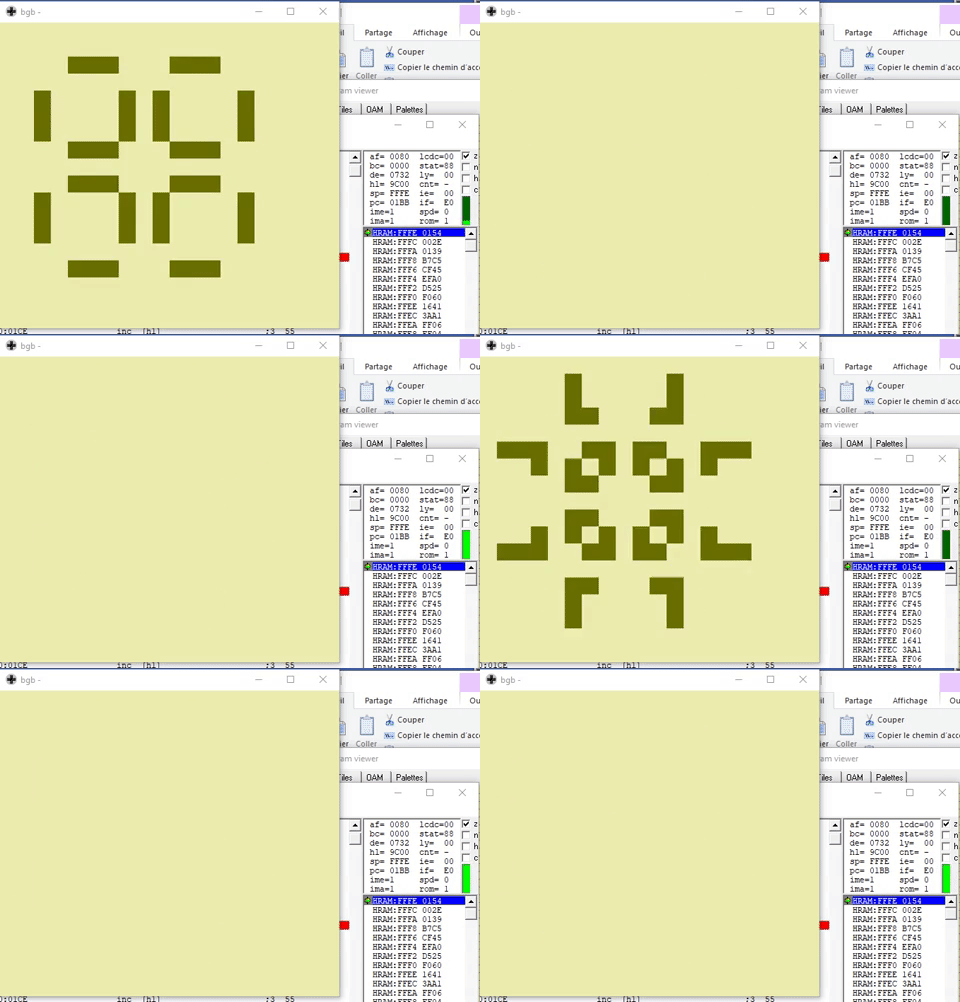
The first working version I got looked like this:
|
|
|